Safety
Dental implant brands at Picasso — Straumann, Nobel Biocare, Osstem, Neodent
Which implant brands Picasso uses, why they matter for NZ follow-up care, and NZD prices for Straumann, Nobel Biocare, Neodent, Osstem, ETK, and SIC systems.
As of May 2026, Picasso Dental Clinic places Straumann, Straumann BLX, Nobel Biocare, Neodent, Osstem, ETK, and SIC implant systems — all named, globally distributed brands with published clinical literature and accessible components for New Zealand follow-up dentists.
When New Zealand patients compare dental implant quotes, the focus often falls on price per unit. That is a reasonable starting point, but the more important question for a patient who lives in New Zealand and is having treatment in Vietnam is: can my New Zealand dentist work on this implant in five years? The answer depends almost entirely on brand. This page explains the implant systems Picasso uses, what each offers clinically, and what they cost in NZD.
Why implant brand is a clinical decision, not a marketing detail
An implant is not a self-contained treatment. It is the foundation for ongoing prosthetic care — crown replacements, abutment adjustments, and potentially full prosthetic rebuilds over a patient’s lifetime. When those events occur, the treating dentist needs to order components that fit the implant fixture in your jaw. That requires knowing the exact brand and system.
Named global brands — Straumann, Nobel Biocare, Neodent, Osstem, ETK, SIC — have published clinical trial data across thousands of patients, global distribution networks for spare parts, abutments available through New Zealand dental laboratories, and manufacturer technical support that transfers to any treating clinician worldwide. If a New Zealand dentist encounters one of these implants with proper documentation, they can identify the connection type, order the correct abutment driver, and service the restoration.
Unknown or unbranded implants present a different situation. Without a brand name, your NZ dentist cannot determine the implant’s connection geometry, cannot order compatible prosthetic components, and cannot access manufacturer support or documentation. Most experienced NZ practitioners will decline to work on unidentified implants — not as a matter of preference, but because fitting the wrong abutment to an implant connection can damage the implant or create a restoration that fails. This is not an overseas-specific problem; it applies to any unidentified implant placed anywhere.
The conclusion is straightforward: insist on a named brand, get it in writing before your procedure, and collect the implant documentation before you return home.
Brands Picasso uses — full tier breakdown
Picasso Dental Clinic places seven implant systems. All are named brands with verifiable clinical literature. At May 2026 exchange rates (1 NZD = 15,000 VND):
| Brand | Origin | Approx. NZD (fixture only) |
|---|---|---|
| Osstem | South Korea | ~NZD 1,667 |
| ETK | France | ~NZD 2,000 |
| Neodent | Brazil (Straumann Group) | ~NZD 2,000 |
| SIC | Switzerland | ~NZD 2,000 |
| Nobel Biocare | Sweden/Global | ~NZD 2,667 |
| Straumann | Switzerland | ~NZD 2,667 |
| Straumann BLX | Switzerland | ~NZD 3,000 |
NZ comparison: a single implant in New Zealand typically costs NZD 6,000–7,000 all-inclusive, or NZD 3,000–4,000 for the fixture alone at many practices. Exchange rates fluctuate; confirm the rate in your written quote at time of booking.
Straumann and Straumann BLX
Straumann is a Swiss company founded in 1954, originally producing precision instruments for osteosynthesis research. It entered implant dentistry in the 1970s and has placed more than 10 million implants globally. Its SLActive surface — a chemically modified titanium surface — has the largest body of peer-reviewed clinical research of any implant surface currently available. No specific osseointegration rate is stated here because published rates vary by patient population, bone quality, and protocol; the relevant point is the research depth, which gives treating dentists confidence in the system’s behaviour across diverse cases.
Straumann implants use an internal connection and are widely stocked by New Zealand dental labs and implant component suppliers. NZ dentists who work with implants routinely encounter Straumann and can identify the system from documentation or from the implant’s appearance on X-ray.
Straumann BLX is a bone-level tapered design engineered specifically for immediate loading protocols — cases where a prosthetic restoration must be delivered on the day of implant placement. The tapered body achieves high primary stability in post-extraction sockets and compromised bone, where a straight implant body may not engage the bone walls as securely. BLX is the system Dr. Hung Le Ba Gia uses for All-on-4 immediate loading cases. It is priced higher than standard Straumann because it is a more specialised implant for more technically demanding clinical scenarios. More on the All-on-4 procedure is at /all-on-4/.
Nobel Biocare
Nobel Biocare is a Swedish company with origins in the osseointegration research of Professor Per-Ingvar Brånemark, who demonstrated in the 1950s and 60s that titanium could form a stable biological bond with bone. Brånemark’s findings, published over subsequent decades, established the scientific foundation for modern implant dentistry. Nobel Biocare commercialised this research and has been a reference brand in implant dentistry for more than 40 years.
Nobel Biocare developed and commercialised the All-on-4 concept with Dr. Paulo Maló — a procedure in which four implants support a complete arch of fixed teeth, with the distal two implants angled to avoid anatomical structures such as the sinus. Nobel Biocare holds patents on the All-on-4 protocol and maintains the most extensive published clinical literature on this technique. For patients specifically considering All-on-4, Nobel Biocare is the brand with the longest-documented track record in that procedure.
Nobel Biocare implants are distributed globally including in New Zealand. Their TiUnite surface — an oxidised titanium surface — is well characterised in clinical literature. Nobel Biocare’s global technical support network means that any treating dentist with internet access can identify a Nobel implant from its lot number and access technical documentation.
Neodent (Straumann Group)
Neodent is a Brazilian implant manufacturer acquired by the Straumann Group in 2015. It was developed to deliver a clinically documented implant system at a lower price point than Straumann’s premium lines — filling the gap between generic implants and premium Swiss systems. It is widely used across Asia-Pacific and Latin America.
Neodent uses a Morse taper connection (also described as a cone connection), which creates a cold-weld-type seal between the implant body and abutment. This connection type is associated with low micro-movement at the implant-abutment interface and good long-term soft tissue outcomes. Its clinical literature is well-established across major implant research publications.
Because Neodent is part of the Straumann Group, its components are distributed through the same networks as Straumann. New Zealand dental labs that stock Straumann components typically have access to Neodent prosthetic components as well. For patients seeking a clinically sound implant at a lower price point than premium Swiss systems, Neodent is a legitimate option with verifiable manufacturer support.
Osstem, ETK, SIC
Osstem is South Korean, founded in 1997, and is one of the highest-volume implant manufacturers in Asia. It is used extensively across South Korean, Vietnamese, and broader Asia-Pacific dental markets. Osstem implants have peer-reviewed literature across a broad range of case types and bone conditions. Their component network in New Zealand is smaller than Straumann or Nobel Biocare but not absent — NZ labs can source Osstem parts, though the process may take longer and requires complete brand documentation from the patient.
ETK (European Implant Technology) is a French implant system distributed across Europe and Asia. It is a documented brand with verifiable clinical literature. Bring detailed documentation if you receive an ETK implant, as your NZ dentist may need to contact the distributor to source components — planning ahead reduces delays if follow-up work is needed.
SIC (SIC Invent) is a Swiss implant system with a clinical record in European and Asian markets. Like ETK, it is a legitimate named brand with published data, though less widely distributed in New Zealand than the premium Swiss systems.
For all three brands, the practical requirement for NZ follow-up is thorough documentation: brand name, model designation, lot number, and abutment specifications. With this information, any implant-experienced NZ dentist can research the system and make an informed decision about whether to service it.
What your NZD quote specifies — reading the brand lines
A properly structured treatment quote from Picasso will include, per implant:
- Brand name (e.g., Straumann, Nobel Biocare, Osstem)
- System or model designation (e.g., BLX, TiUnite, USIII)
- Diameter and length (e.g., 4.1 mm x 10 mm)
- Abutment type and material
- Crown material (zirconia, PFM, PMMA for temporaries)
- Price per component in both VND and NZD
If a quote you receive from any clinic does not specify brand and model, ask for it before accepting the quote. A quote that says “titanium implant” with no further specification is not an adequate treatment plan. See /pricing/ for guidance on reading a full treatment estimate.
What you receive for NZ follow-up
Before leaving Picasso after implant treatment, collect the following:
- Implant passport or manufacturer label showing brand, lot number, and model
- Abutment specification (connection type, diameter, height)
- Crown material and shade specification
- Surgeon’s signed treatment summary with dates and tooth positions
- Radiographs taken post-placement (peri-apical X-ray confirming seating)
- Picasso warranty documentation — /warranty/
Without this documentation, a New Zealand dentist working on your implant years later is operating without the information they need. With it, they can order compatible components, understand the original treatment, and provide competent follow-up care.
Implant brand comparison shopping traps
These patterns appear in quotes from clinics across multiple countries. Be alert to:
“Titanium implant” with no brand name. Titanium is the material; brand is the manufacturer. Every dental implant placed in the last 40 years is titanium. A quote that does not name the brand is withholding information you need.
“Korean implant,” “Swiss implant,” or “European implant” without naming the manufacturer. Country of origin is not a brand. Osstem and Dentium are both South Korean; Straumann and SIC are both Swiss. The name matters, not the country.
Brand substituted on the day of surgery. This occurs when a quote specifies a premium brand but a different brand is placed during surgery, usually without informing the patient. To prevent this, observe the implant packaging label when it is opened at chairside. Ask your surgeon to confirm the brand and lot number before placement begins, and request the packaging labels for your records.
Ultra-low per-implant prices with no brand itemised. Generic or unbranded implants can be purchased at very low cost. A quote that is significantly below even the Osstem price point at a given clinic is worth questioning — ask specifically what brand and lot number will appear on your implant passport.
Missing abutment or crown costs. The implant fixture is only one component of the total cost. Quotes that show only the fixture price without abutment and crown costs understate the total. Request a complete line-item breakdown before agreeing to treatment.
Matching brand tier to clinical need — the surgeon’s logic
Brand selection at Picasso is a clinical decision made by the treating surgeon. The factors that influence it include:
Bone quality and volume. Compromised or thin bone — common in patients who have been missing teeth for years — requires an implant designed for that situation. Straumann BLX’s tapered design is engineered for post-extraction and limited-bone scenarios. Standard Osstem or Neodent fixtures are appropriate for patients with adequate bone volume and density.
Immediate versus delayed loading. All-on-4 and immediate loading protocols require high primary stability at the time of placement. BLX and specific Nobel Biocare configurations are designed for this. Delayed-loading cases — where the implant heals over several months before a crown is attached — have more flexibility in brand selection.
Patient’s NZ follow-up dentist’s familiarity. If a patient’s NZ dentist has confirmed they work with a specific implant system, selecting that system at Picasso reduces friction at the follow-up stage. Mention your NZ dentist’s preferred brand in your quote request.
Budget within clinical equivalence. The clinical team will recommend the system best suited to the case, and will present options across price tiers where clinically equivalent alternatives exist. Discuss this explicitly during your treatment planning consultation — the goal is the right implant for your bone and your long-term follow-up situation, at a price that makes the trip worthwhile.
For All-on-4 and complex full-arch cases, brand selection is discussed in more detail at /all-on-4/. For general implant information, see /dental-implants/.
Next step
Request a free NZD quote at /free-quote/. Include your OPG or CBCT if you have one — it allows the clinical team to confirm which implant system is appropriate for your bone situation before you commit to travel. Related pages: /safety/sterilisation-standards/, /safety/honest-risks/, /warranty/.
About this page
Medically reviewed by
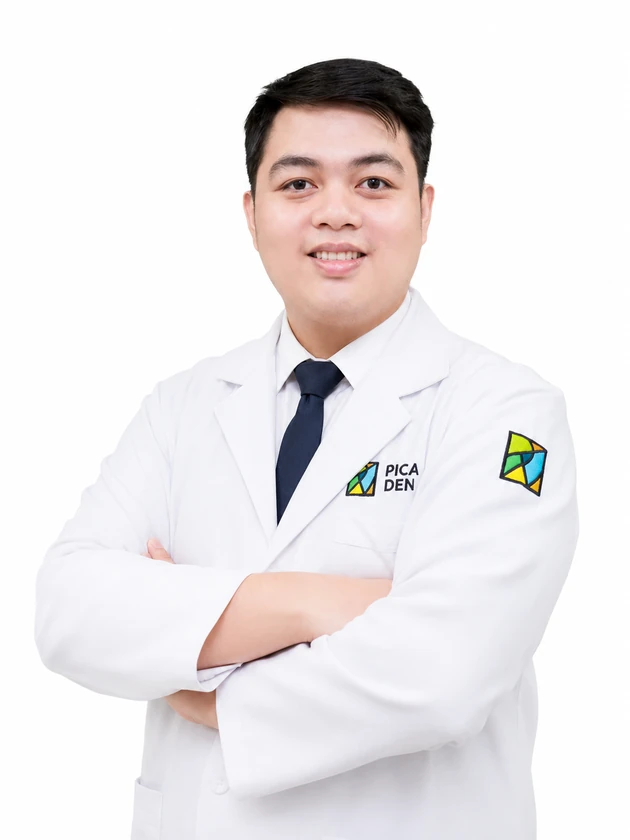
Dr. Hung Le Ba Gia
Lead Implant Specialist, Picasso Dental Clinic
DDS · 1,000+ implants placed · 200+ All-on-4 cases · Picasso Dental Clinic implant team
Clinical focus: Implantology · Single implants · All-on-4 · Multi-unit implant bridges
Dr. Hung Le Ba Gia (also known as Dr. Evans) is Lead Implant Specialist at Picasso Dental Clinic, with over 1,000 implants placed and more than 200 full-arch All-on-4 cases completed. His caseload covers single-tooth replacement, multi-unit implant bridges, and full-arch rehabilitation across the Osstem, ETK, Neodent, Nobel Biocare, and Straumann systems.
Useful answers
Frequently asked questions
What implant brands does Picasso use?
Picasso places Osstem, ETK, Neodent, SIC, Nobel Biocare, Straumann, and Straumann BLX. All are named brands with peer-reviewed clinical literature and distributed component networks. Your written quote specifies the brand and system per tooth or arch.
How much does an implant cost at Picasso in NZD?
At May 2026 exchange rates (1 NZD = 15,000 VND): Osstem approximately NZD 1,667; ETK, Neodent, or SIC approximately NZD 2,000; Nobel Biocare or Straumann approximately NZD 2,667; Straumann BLX approximately NZD 3,000. NZ comparison: NZD 6,000–7,000 for a single implant including crown.
Why does implant brand matter for my NZ dentist?
If you need a crown replaced, an abutment adjusted, or any follow-up work in New Zealand, your local dentist must be able to identify the implant system to order compatible components. Unknown or unbranded implants are typically refused by NZ dentists because components cannot be sourced and responsibility cannot be assigned.
Is Neodent a reliable brand?
Yes. Neodent is part of the Straumann Group (acquired 2015) and is widely used across Asia-Pacific. It uses a Morse taper connection and has documented clinical outcomes. Straumann Group distributes Neodent components, so NZ dental labs can access abutments and prosthetic parts.
What is Straumann BLX and why is it more expensive?
Straumann BLX is a bone-level tapered implant designed for immediate loading protocols — including All-on-4 — where an implant must achieve high primary stability on the day of placement. The tapered design is engineered for use in compromised or post-extraction bone. Its higher price reflects its specific engineering and the clinical scenarios where it is selected.
Did Nobel Biocare develop the All-on-4 procedure?
Yes. Nobel Biocare developed and commercialised the All-on-4 concept with Dr. Paulo Maló. The procedure — four implants supporting a full arch prosthesis with distal implants placed at an angle — was patented by Nobel Biocare, and the company maintains the most extensive published literature on the technique.
Can my NZ dentist work on implants placed in Vietnam?
If the implant is a named global brand (Straumann, Nobel Biocare, Neodent, Osstem, ETK, SIC), and you have the implant documentation — lot numbers, brand confirmation, abutment specs — most NZ dentists with implant experience can service the prosthetic components. Bring your implant passport and treatment summary.
What is a clone implant and why should I avoid it?
Clone implants are reverse-engineered copies of name-brand systems, sold without the original manufacturer's testing or quality control. They are typically not identifiable by brand name, have no global component network, and no published long-term clinical data. NZ dentists will generally refuse to work on them.
How do I know the brand will not be swapped on the day of surgery?
Your written pre-operative quote and treatment plan should name the implant brand. On the day, the sterile implant packaging is opened at chairside — you or a support person can observe the brand labelling. Ask your surgeon to confirm the brand and lot number before placement, and request the packaging labels for your records.
Do the NZD prices include the crown as well?
Implant prices quoted here refer to the implant fixture (the titanium root component). The abutment and crown are typically quoted separately. Request a full breakdown in your free quote at /free-quote/ so the total per-tooth cost is clear.